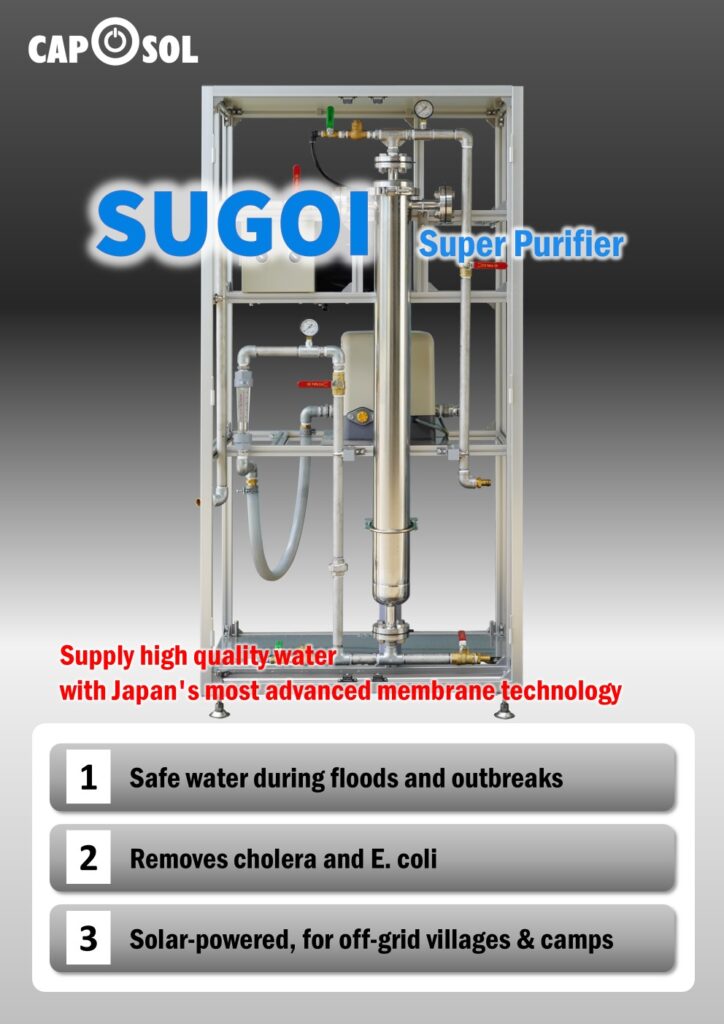
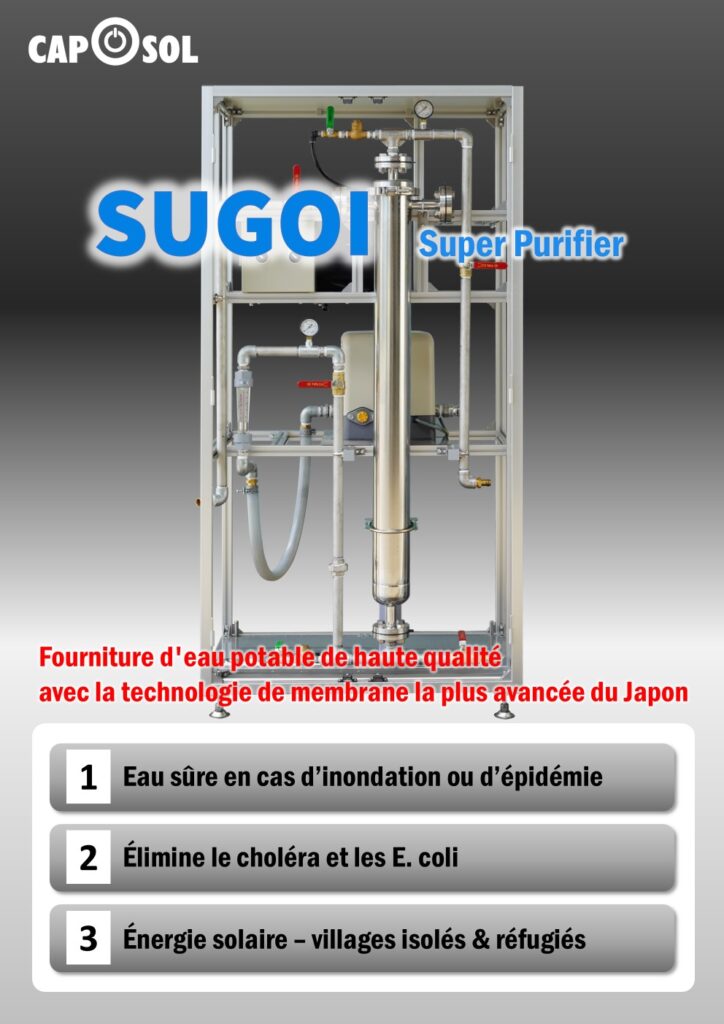
CAPOSOL provides solar-powered water purification solutions for rural and off-grid communities in Africa. Our system uses low-power filtration technology to produce safe drinking water from surface water sources such as rivers, ponds, and shallow wells.
Challenges in Access to Safer Water
Many regions in the world face challenges in accessing safe and clean water, especially in rural areas of Sub-Saharan Africa, where this issue is particularly serious. In these areas, groundwater and surface water are often used as daily water sources. Even when the water looks clear, it may still contain invisible microorganisms such as bacteria and viruses, which can cause waterborne diseases and serious health problems.
In many villages, proper water treatment systems are not available. As a result, people often have no choice but to use groundwater or surface water directly. To help address this issue, sustainable water purification technologies that fit the local environment are urgently needed. These efforts can contribute to improved public health and better living conditions.
A Reliable Water Purification System for Disasters
Microorganisms such as norovirus, Escherichia coli (E. coli), and Vibrio cholerae are major causes of waterborne infectious diseases. Among them, norovirus is one of the smallest viruses that cause gastroenteritis, measuring approximately 27–38 nm in size. Due to its extremely small size, it is difficult to remove using conventional bacterial filtration systems.
Our advanced water purification system is designed to improve the safety of treated water by reducing harmful microorganisms through high-performance membrane filtration.
During floods and other water-related disasters, the risk of infection from E. coli and Vibrio cholerae increases. These bacteria are larger than viruses and can be effectively filtered by appropriate membrane technology. Our purification system helps reduce these harmful bacteria through membrane filtration.
With our high-performance filtration technology, we aim to support access to safer treated water in emergency situations and rural communities.
Hollow Fiber Filtration Membrane Technology
Japan’s advanced membrane filtration technology can remove physical impurities and harmful microorganisms from water. This system does not use chemicals and can provide stable treated water quality. Similar membrane technologies have already been exported and used in many parts of the world.
However, traditional systems often require a stable commercial power supply for filtration, which limits their use in developing countries and off-grid areas. To address this challenge, we have developed an energy-saving system that can work with solar power.
This new system is designed to supply a large amount of treated water in areas without electricity infrastructure. By combining water purification technology with solar power, it can help expand access to safer water and support sustainable water supply systems.
Purification Capacity & Membrane Cleaning Function
In areas facing severe water shortages or limited access to safe water, our smallest device can treat up to 16 liters per minute of water, depending on the condition of the source water.
Our water purification system can filter approximately 16 liters per minute from general surface water sources. It is also scalable, meaning the system can be expanded depending on local demand.
The automatic cleaning function helps reduce maintenance costs by extending the life of the filter membrane. Depending on water quality and operating conditions, even with 8 hours of daily use, the membrane can last over five years, supporting stable and long-term operation.
Slow Sand Filtration
Slow sand filtration is a technology that can handle highly turbid, or muddy, water by using coagulants, which improve filtration speed. However, a chemical-free method without coagulants is more environmentally friendly, although it may be less effective for highly turbid water.
One challenge with this method is that bacterial activity can cause sand layers to harden, requiring regular maintenance. In small-scale systems, this maintenance can be difficult because it requires manual labor, time, and technical knowledge.
Another challenge is that slow sand filtration requires a large installation space. While it is effective for large-scale water treatment, it can be difficult to introduce in small communities with fewer than 5,000 people due to high installation and maintenance costs.
For small-scale communities or highly turbid water sources, combining slow sand filtration with simpler, low-maintenance alternatives may be necessary to create a more efficient and sustainable water treatment system.
Water Quality Note
This system is designed to improve water quality by removing physical impurities and harmful microorganisms through membrane filtration. However, hollow fiber membrane filtration does not remove dissolved substances such as heavy metals, salinity, or chemical contaminants. Therefore, prior water quality testing is recommended when the source water may contain chemical pollutants.
Water Purification Process