JICA Short-Term Internship 2026
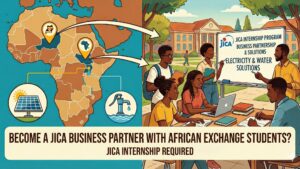
Tsuji Plastics focuses on two of the major challenges facing many communities in Africa: access to electricity and access to water.
To help address these challenges, we have been developing products and systems designed for practical use in African communities, including solar power systems that can operate in areas without reliable electricity and water purification systems that can also be powered by solar energy.
However, we believe that products alone are not enough to build a sustainable business in Africa.
For us, having a reliable and trusted local business partner is essential. A good partner understands the local situation, has strong relationships within the community, and can identify opportunities that may not be visible to us from Japan.
Finding the right partner takes time. After that, we need to share our knowledge, provide technical training, and eventually transfer the necessary technology and know-how.
It is not a quick process, but we believe this approach is essential if we want to build a long-term business in Africa.
This Year: Students from Madagascar and Burkina Faso
Every year, Tsuji Plastics welcomes African students studying in Japan through JICA’s internship programs.
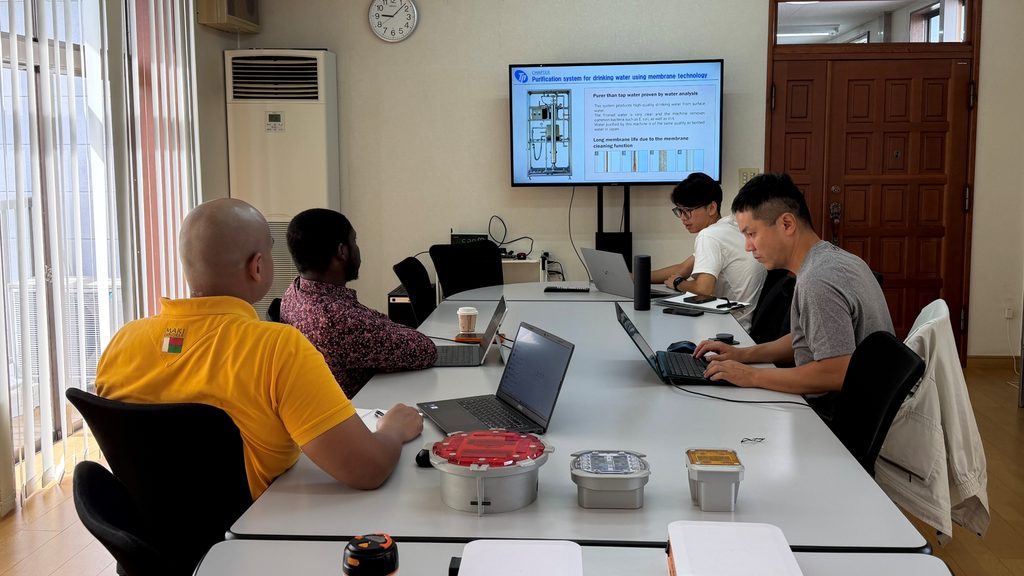
In 2026, two students from Madagascar and Burkina Faso chose Tsuji Plastics for their short-term internship.
We are very grateful that they selected our company.
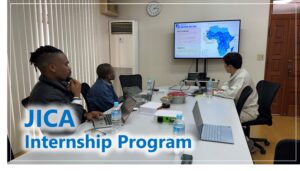
The purpose of the short-term internship is not to teach them everything about our technology in just a few days. Instead, the first step is for them to understand what Tsuji Plastics is trying to achieve in Africa and to experience our products firsthand.
From there, we discuss a much more interesting question:
“How could these products be used to solve challenges in your own country?”
That is where the real value of the internship begins.
Seeing, Touching and Thinking About Business
During the internship, the students did not simply listen to presentations about our technology. They actually operated and tested our solar power and water purification systems.
In many rural areas of Africa, access to electricity remains limited. At the same time, demand for charging smartphones, lanterns and other devices is high.
We therefore introduced one of our solar charging systems designed for this kind of environment. The system can charge devices directly from solar power without using an inverter or battery, making the system simpler and reducing the burden of battery replacement.
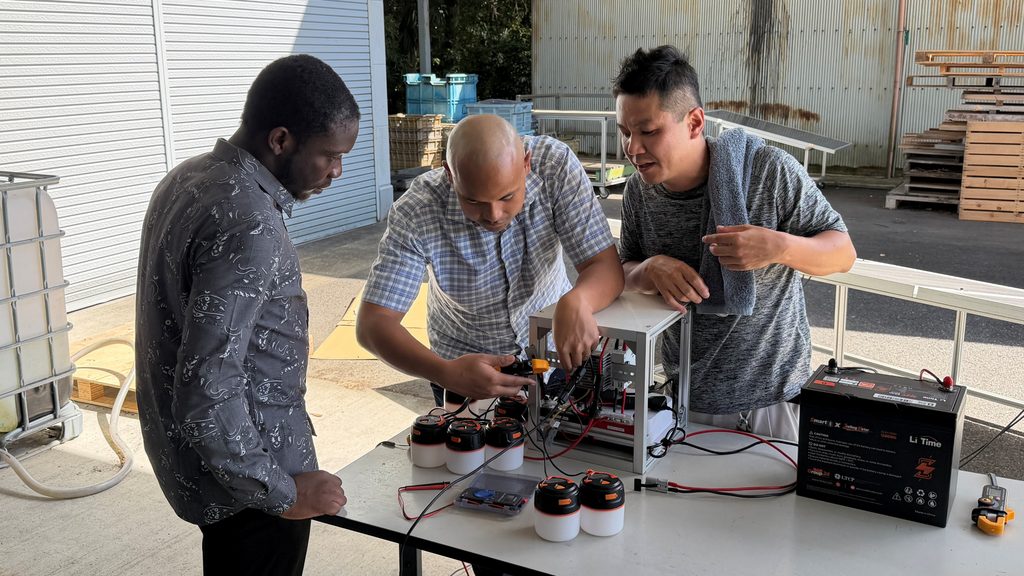
The students were able to operate the equipment themselves and consider how this kind of system could be used as a local charging business.
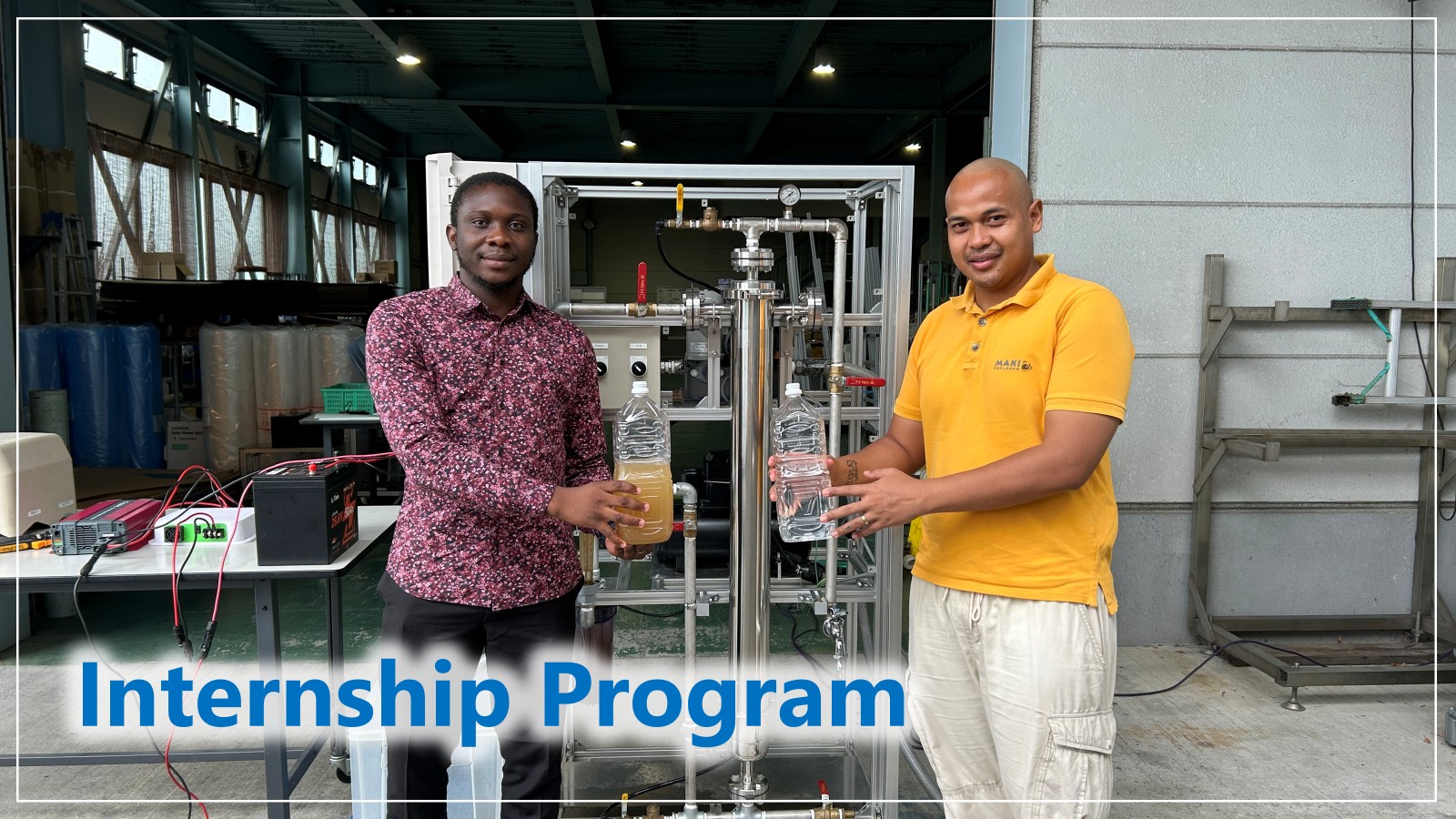
They also tested our solar-powered water purification system.
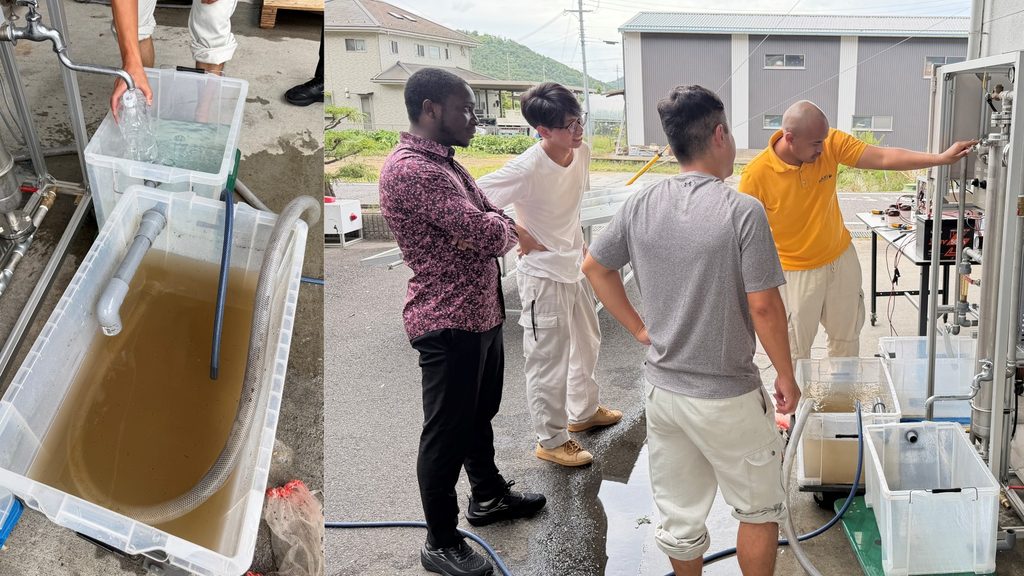
By passing turbid water through the system, they could see the water become clear with their own eyes.
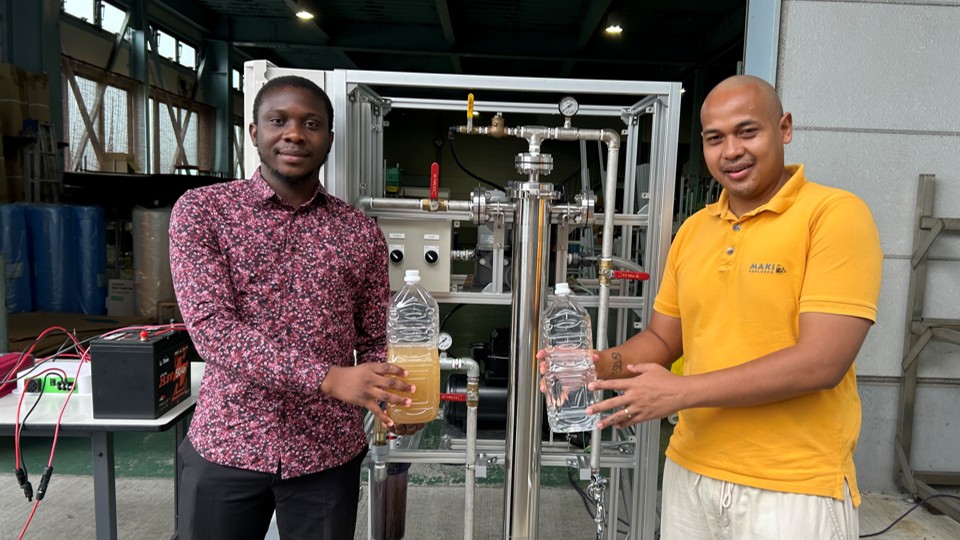
Seeing the change directly is much more powerful than looking at specifications in a brochure.
After learning about the products, we asked them to think about how the technologies could be applied in Madagascar and Burkina Faso.
During the internship, we heard many ideas and potential business opportunities that we had not considered ourselves.
In other words, the learning was not one-way.
We introduced our technology to them, but they also taught us a great deal about local needs, lifestyles and business opportunities in their home countries.
That made the internship extremely valuable for us as well.
Experiencing Japan Is Also Part of the Internship
The internship was not only about technology and business.
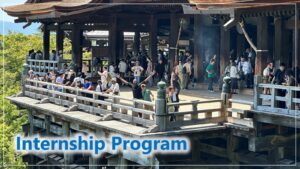
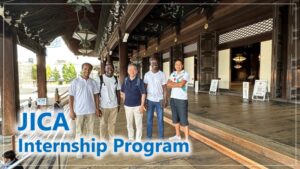
During the holiday, we visited Kyoto together.
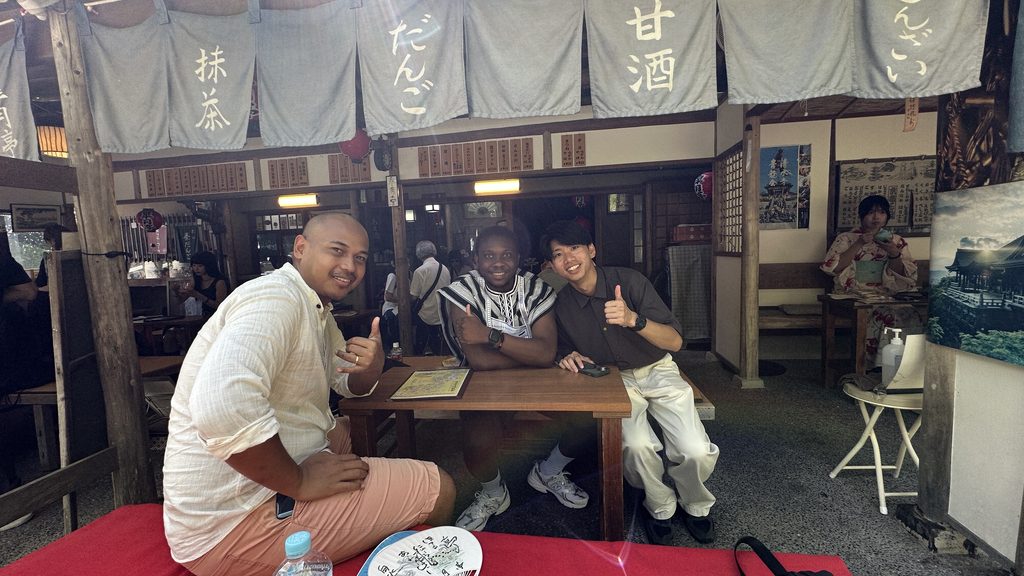
Spending time together outside the workplace is also important.
A successful business partnership requires more than technical knowledge. It requires mutual understanding, communication and, above all, trust.
Sharing meals, talking about our countries and cultures, and simply spending time together helps us understand each other in a way that cannot be achieved through business meetings alone.
A Short-Term Internship Is Only the First Step
At the end of the internship, the students gave presentations on how Tsuji Plastics’ products could potentially be used to address challenges in their own countries.
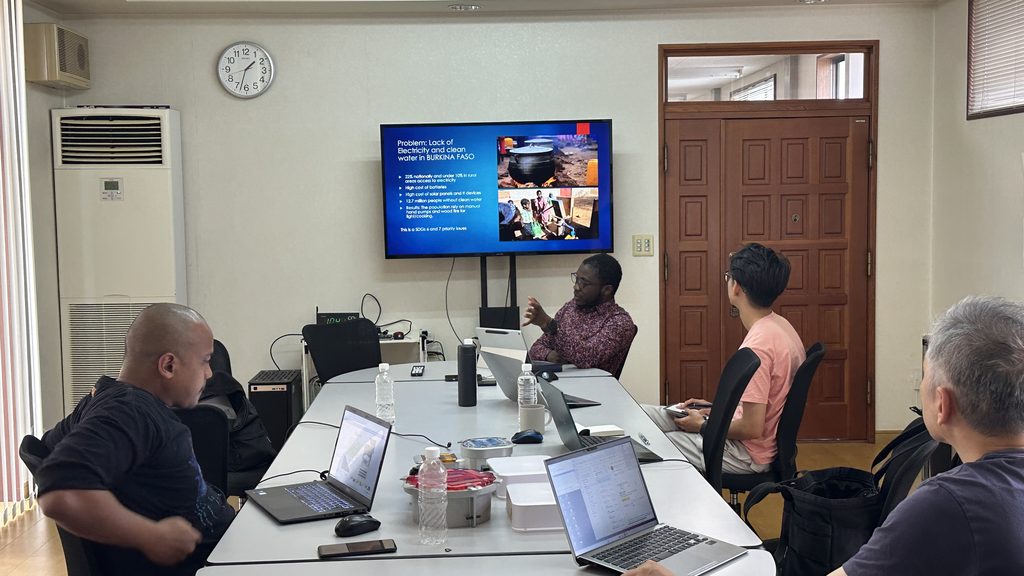
Despite having only a limited amount of time to prepare, they developed thoughtful presentations connecting local challenges with possible applications of our technology.
We were impressed by both the quality of their ideas and their ability to organize them in such a short time.
This was only a short-term internship.
If we decide to develop an actual business together in the future, the next step would be a longer internship or training program. Through that process, they would gain a deeper understanding of our products and technologies, and we could begin the process of technical transfer.
So, for us, this short-term internship is the first step toward a possible future business partnership.
We hope that one day they will think:
“I would like to build a business in my country together with Tsuji Plastics.”
And if that day comes, we would be very happy to work together to address electricity and water challenges in Madagascar, Burkina Faso, or elsewhere in Africa.
Once again, we would like to thank both students for choosing Tsuji Plastics for their internship.
We look forward to the day when we can work together in Africa.