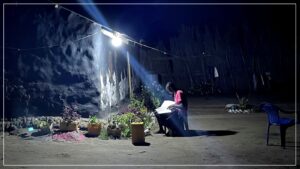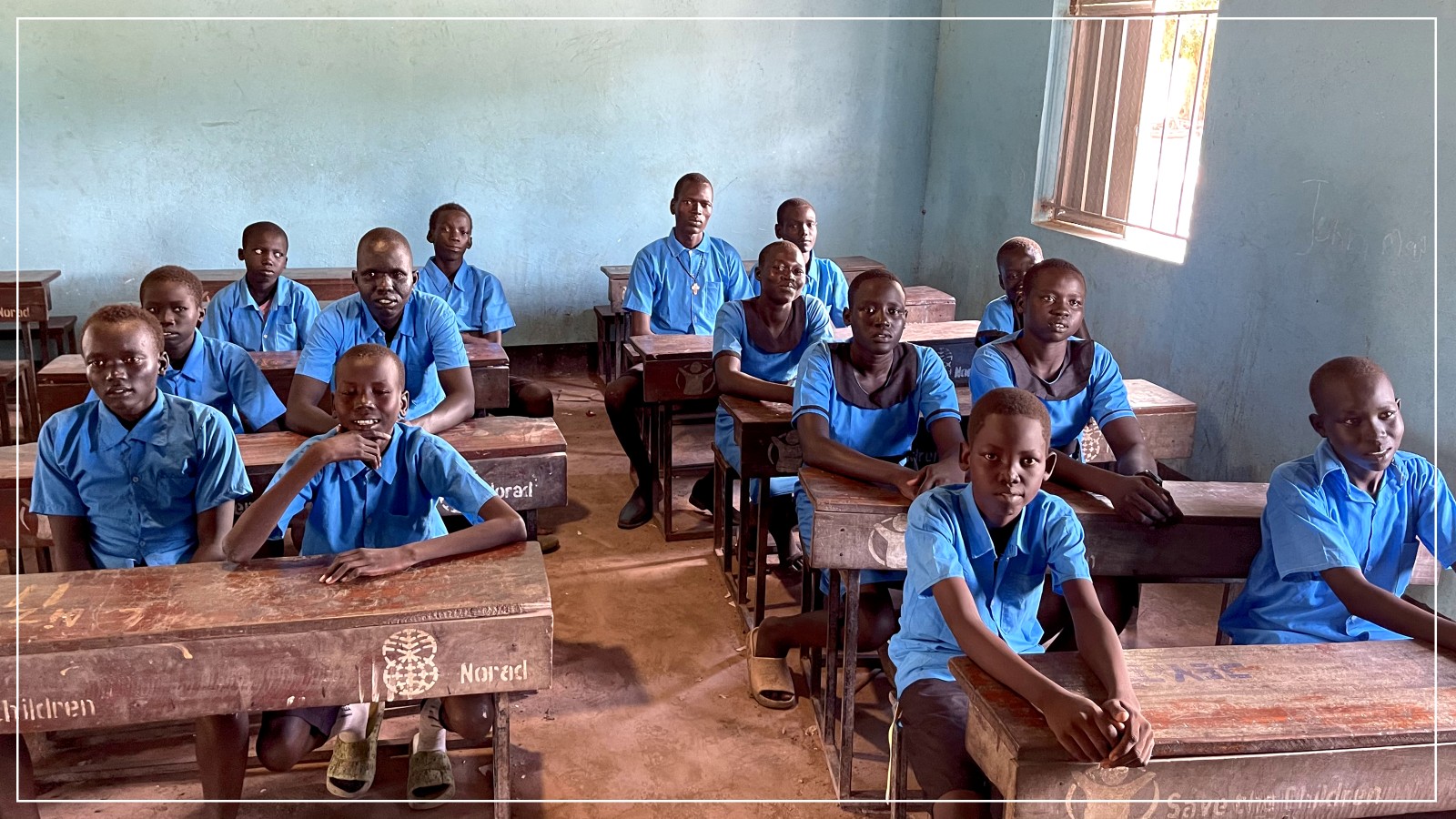
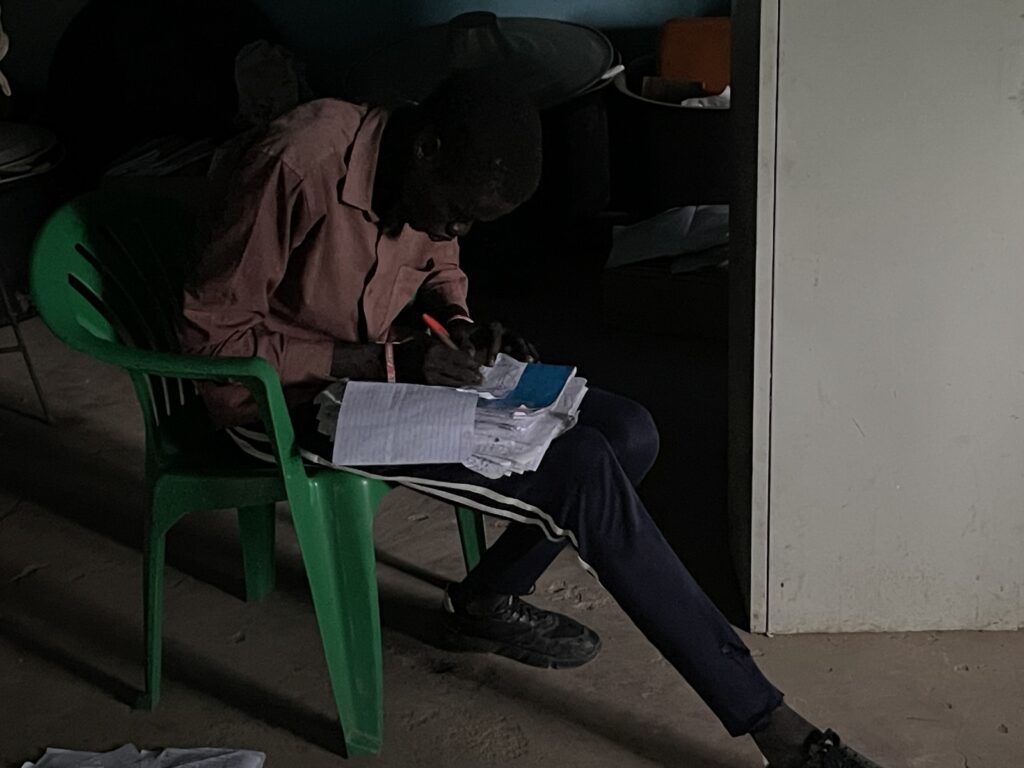
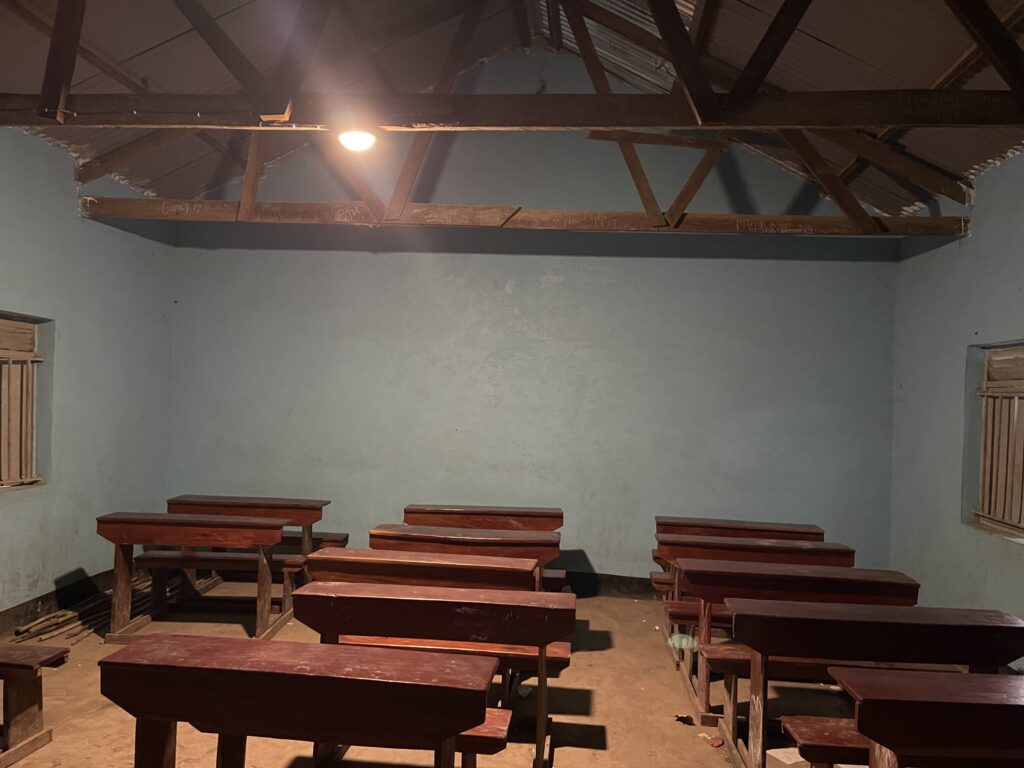
At night, the school would fall into complete darkness.
In rural South Sudan, that was simply normal.
The project began with a message from our business partner from South Sudan. He is an ABE Initiative alumnus who studied technical skills in Japan and is now engaged in solar business development in his home country. One day, through a conversation with an acquaintance working in the Ministry of Education, he learned about the reality faced by rural schools and reached out to us, asking whether there was anything we could do.
That was how this solar deployment project for schools in South Sudan began.
Working with the Ministry to Make the Project Possible
It is said that around 6,000 schools in South Sudan still do not have access to electricity. With so many potential target schools, choosing sites independently could create regional tension.
Earlier, a local government official in Uganda had told us that many African countries are multi-ethnic societies, and even small regional disparities can become a source of conflict. That was an important lesson for us. It reminded us that understanding local realities is not optional. It is a prerequisite for making a project work.
For that reason, site selection had to be carried out in coordination with the Ministry. We submitted a letter requesting collaboration and held repeated online discussions with the Undersecretary while building a framework for site selection and implementation support.
Eventually, the project was formally moved forward under an MOU with the Ministry. At the same time, this was a self-funded initiative by Tsuji Plastics. Because of that, the number of schools we could support was limited, and we decided to install one system at a primary school and one at a secondary school.
Electricity Disappears Just Minutes Outside the Capital — Yet the First Site Was 400 km Away
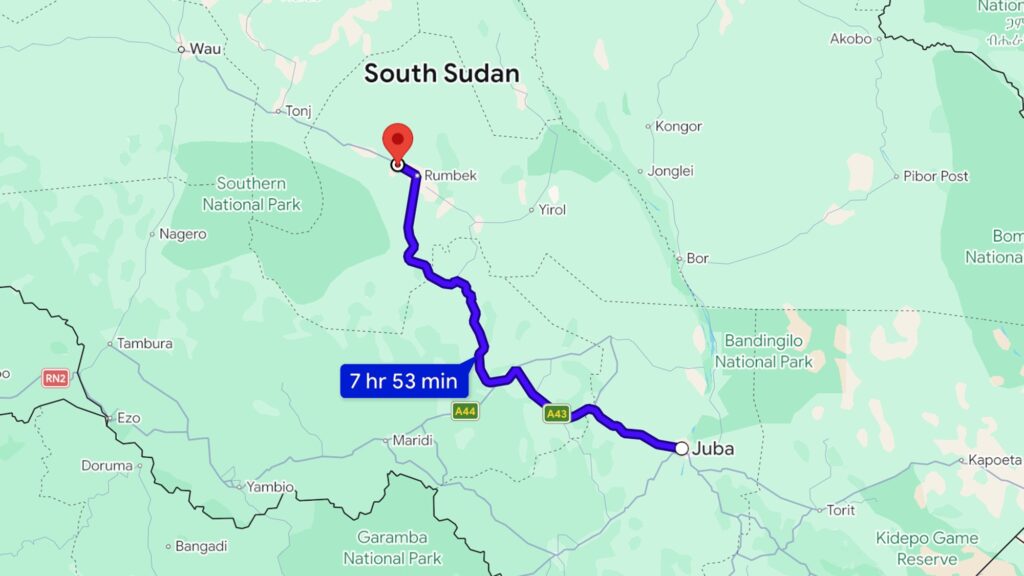
In South Sudan, electricity disappears quickly once you leave Juba. In practical terms, it feels as though you can enter a non-electrified area within ten minutes of leaving the capital.
There are no classroom lights, and no electricity even in the staff room. Yet schools continue to operate, and children continue to attend.
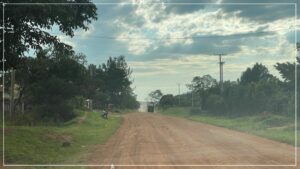
Despite the large number of schools without electricity closer to the capital, the first site selected for installation was Mayom Primary School, located about 400 kilometers from Juba. The road was mostly unpaved, communication was unreliable, and the trip took roughly eight hours.
When the Vehicle Stopped and Night Fell
On the way to the installation site, the local team’s biggest concern was not vehicle trouble. It was the possibility of armed ambushes. On this route, such incidents were known to occur, and they were considered one of the major security risks in South Sudan.
The team planned the route with safety as the highest priority and remained alert throughout the journey.
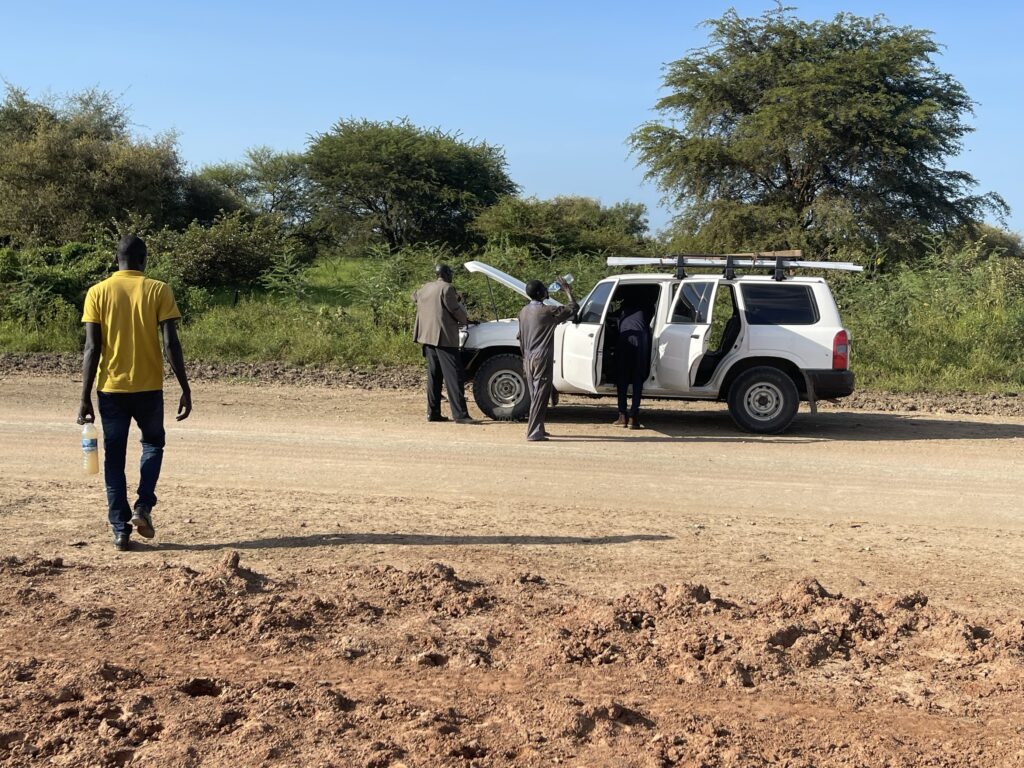
Yet what actually happened was something they had not expected: the vehicle broke down. There was no phone signal, and there were no houses nearby.
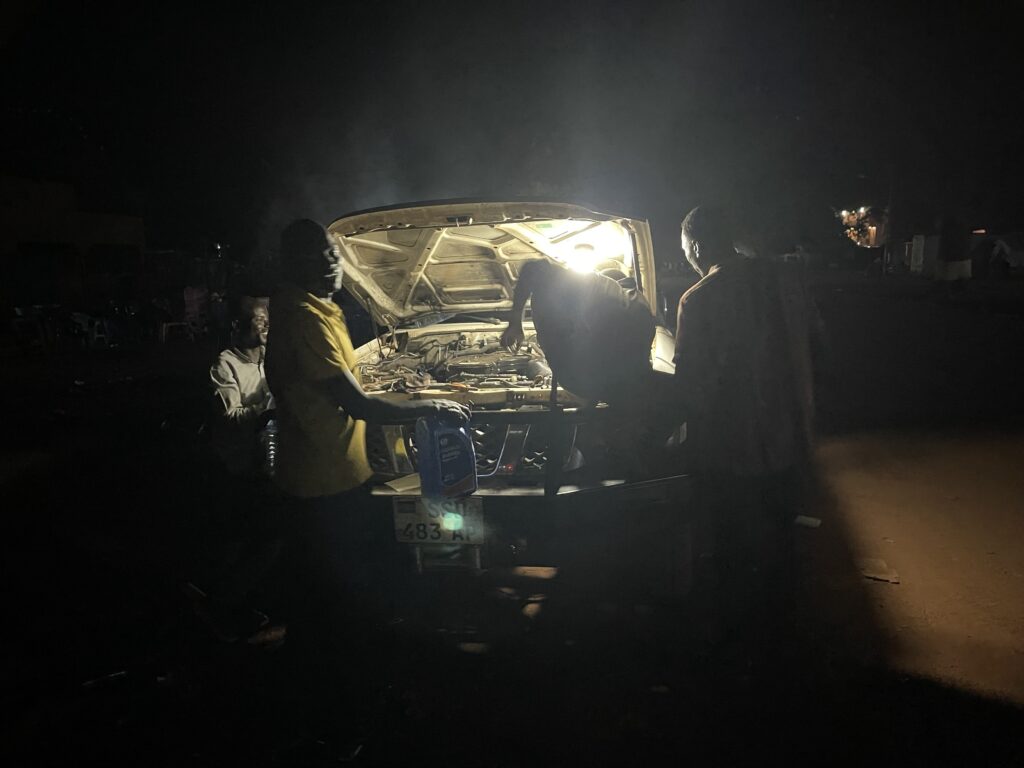
Because the area had no electricity, the surroundings became completely dark at night. The staff traveling with the team were seriously worried — not only about the risk of attack, but also about the possibility of being attacked by wild animals after dark.
Our local partner had often said that whenever traveling long distances, a mechanic must always accompany the team. Through this incident, we fully understood why.
In the end, the team had to spend the night there. Fortunately, they were able to restart the next morning and continue the journey safely.
How Just 500W Changed a School
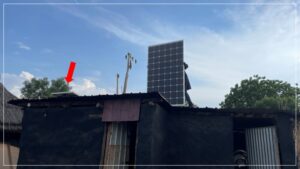
The system installed at the school was only 500W.
It was intentionally designed as the minimum necessary configuration, taking into account the future cost of battery replacement.
Even so, that small amount of electricity changed the school in a big way.
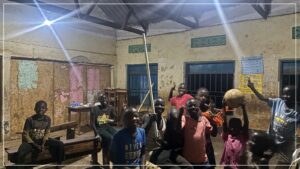
For the first time, light entered classrooms that had previously become unusable after sunset. Before the installation, teachers sometimes had to grade test papers in the dark. The new electricity did more than light the classroom. It also supported charging for teachers’ devices, power for the staff room, security lighting, and even a charging service operated at the school.
In the area around the primary school, charging mobile phones and other rechargeable devices is not easy. People may have to travel long distances just to get access to charging. At the same time, the school itself faced the challenge of securing funds for future battery replacement.
That led to a simple but important idea: if the school provided charging services, it could help solve both the community’s inconvenience and the school’s maintenance challenge at the same time.
Although the school is a public institution, it obtained permission from the Ministry and started offering charging services on campus.
Demand was stronger than expected, and within just one year the school had already established a financial basis for future maintenance. Even now, two and a half years after installation, the system is still operating stably without battery replacement. This clearly shows how little strain the design places on the battery.
Some solar systems installed in the past reportedly stopped functioning after only a short period of time. In contrast, this project uses battery-less compatible equipment and is installed and maintained by a South Sudanese professional who studied the technology in Japan. That is why the system can continue to operate with confidence.
A Small Source of Power, A Wider Change
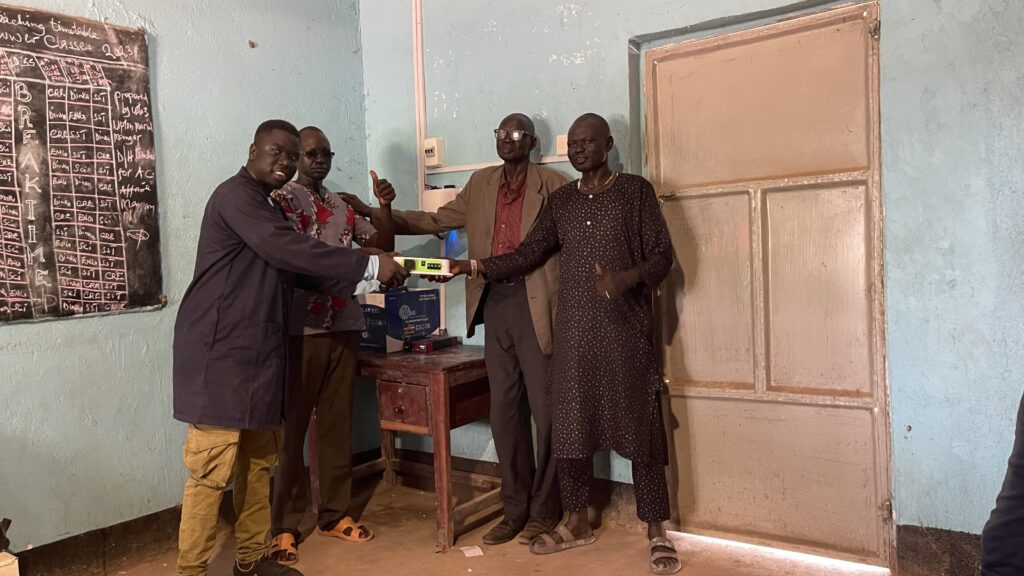
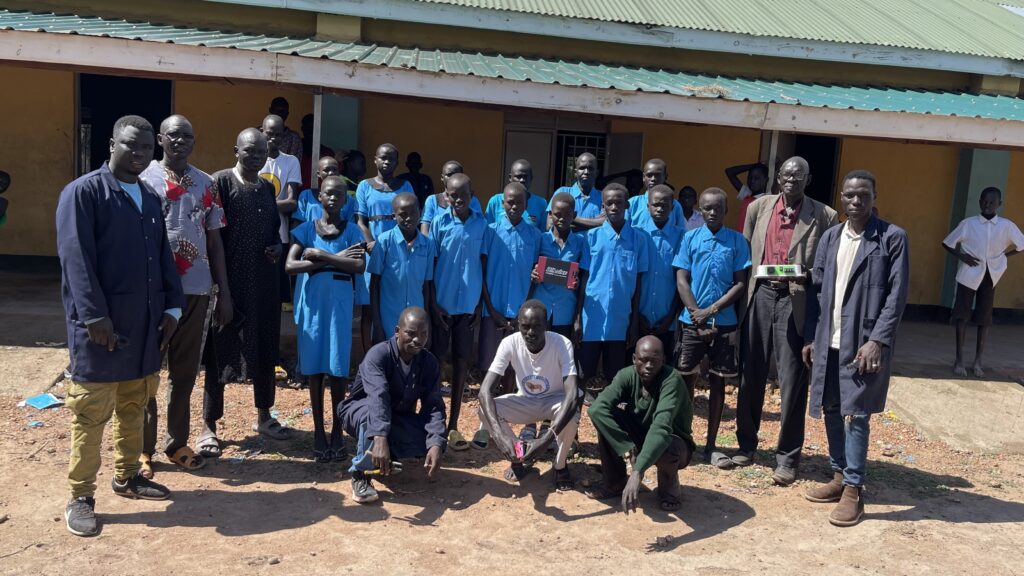
The second site, Terekeka Secondary School, was within day-trip distance from Juba. After the harsh conditions surrounding the first installation, the fact that it could be reached and returned from in one day alone felt reassuring.
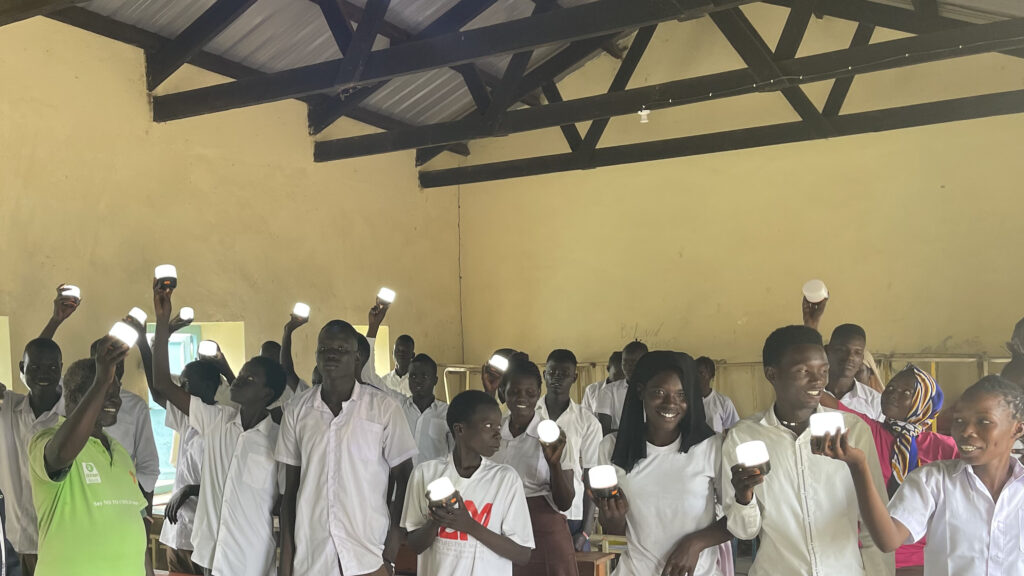
At this school, we also provided rechargeable lanterns for night study. The brightness can be adjusted, allowing students to study at night more comfortably. The lanterns also include an internal power bank function, making it possible to charge smartphones and other devices.
Providing light is not only about brightening the night. It is also about extending study hours, reducing everyday inconvenience, and gradually expanding what schools and communities are able to do.
Following the school installation, inquiries from surrounding areas also began to increase. The amount of electricity may be small, but the impact has clearly started to spread.
Closing Thoughts
Using technology learned in Japan for schools in one’s own country — that may be the most meaningful achievement of this project.
What makes this effort especially significant is that it is being implemented on the ground by an ABE Initiative alumnus. More than the equipment itself, the real outcome may be that a person who trained in Japan is continuing to put that knowledge into practice where it is needed most.