No Safe Groundwater, So People Use Lake Water
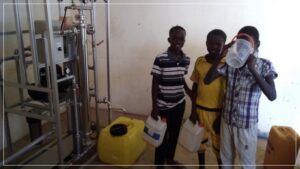
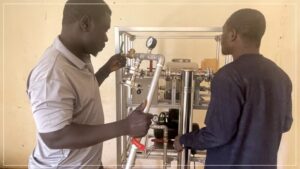
In February 2026, our team installed a water purification system in a village in Uganda.
In this village and many surrounding areas, groundwater has become salty and cannot be used as normal household water. In some areas, groundwater also contains a high level of E. coli bacteria. So, having a well does not always mean having safe water.
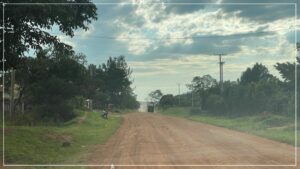
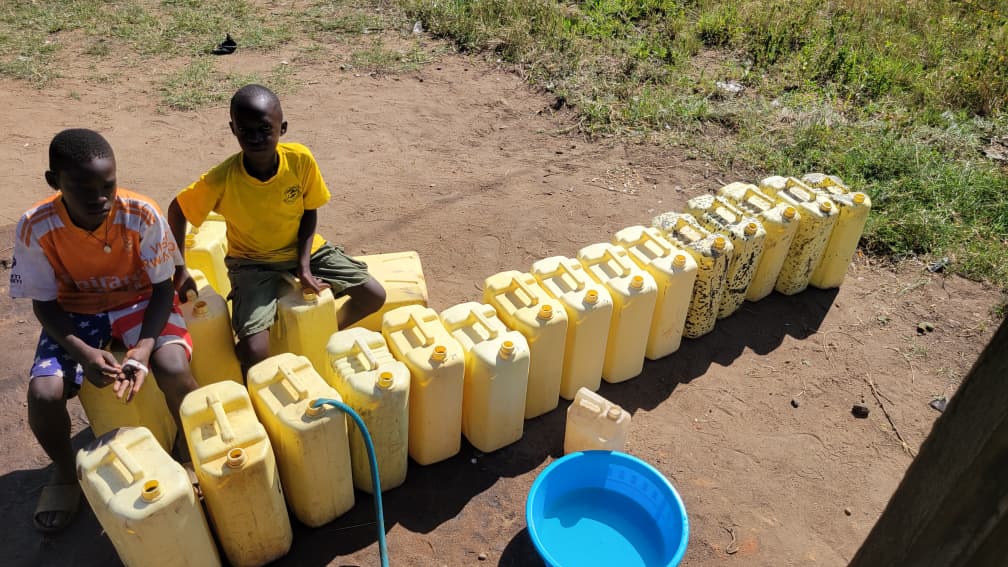
Because of this, people in the village had to collect water from a nearby lake and use it in their daily lives.
When we visited the village, we saw people walking to the lake with jerry cans, collecting the water, and carrying it back home. This was part of their normal daily life.
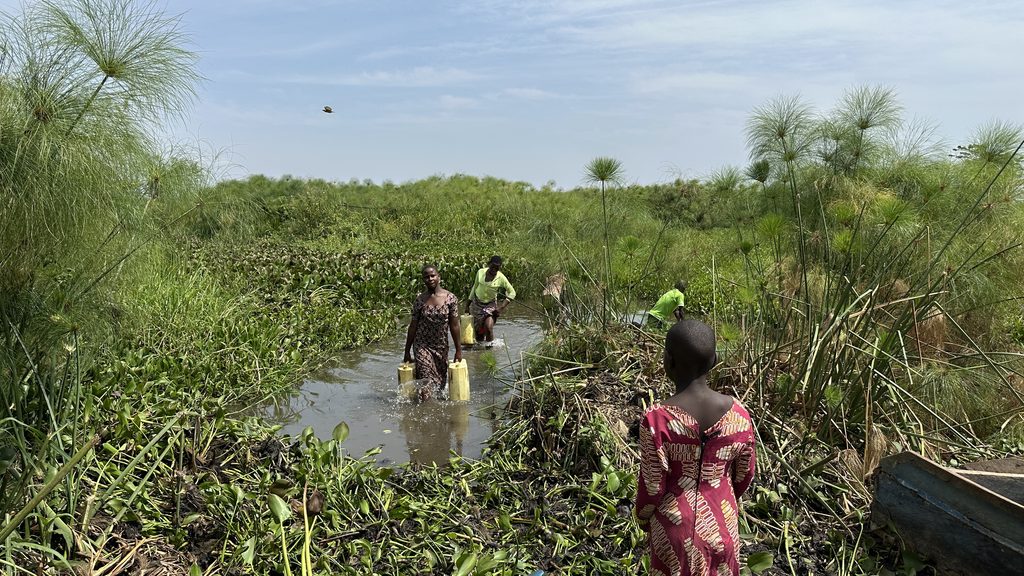
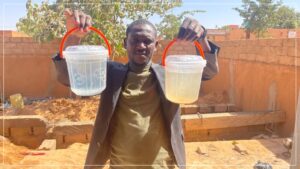
As you can see in the photo, the water is very muddy.
But they had no other choice.
That is why our team installed a water purification system in this village. The system cleans the lake water so that people can use much safer water.
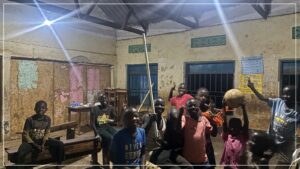
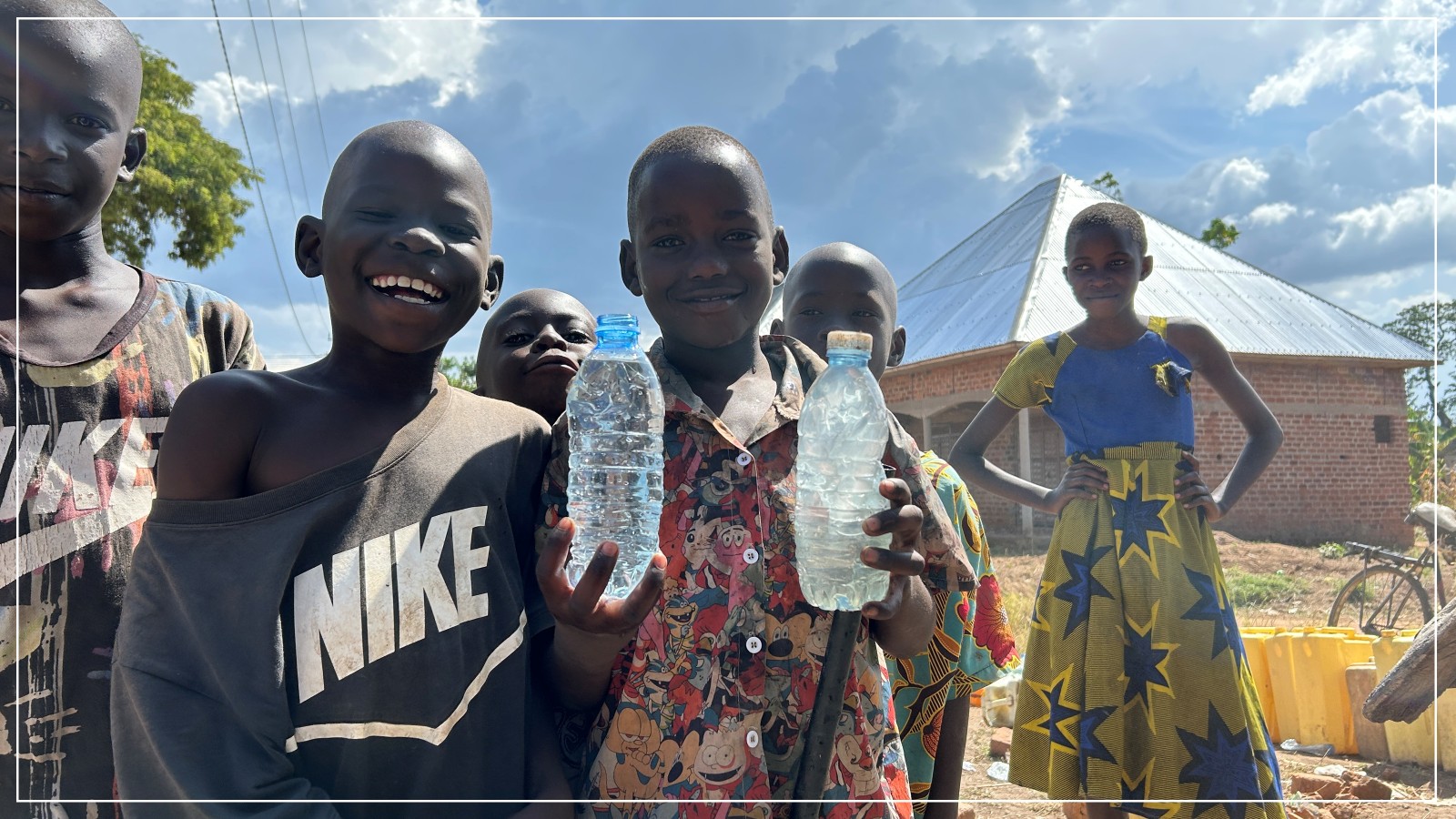
After the installation, local people told us that fewer people were suffering from diarrhea after they started using the purified water. Today, not only people in the village, but also people from nearby communities come to use this water.
We introduced the installation in our previous blog article.
【Link to the previous article】
Then, Only 8 Months Later…
Everything seemed to be going well.
But only eight months after installation, we received an urgent message from Uganda.
“The amount of purified water has become very low.”
Many people now depend on this system. If the amount of purified water becomes too small, it directly affects daily life in the village and nearby communities. The local team told us that there was not enough water for everyone.
“Only eight months? That is too soon…”
First, we thought there might be a problem with the equipment.
We asked the local team to record videos with a smartphone while operating the system. We checked the videos from Japan.
Then we noticed something strange.
The membrane cleaning process was not being done correctly.
After checking more carefully, we found that the correct cleaning process had hardly been followed for a long time. The pressure gauge also showed that the membrane was probably badly blocked.
This was a serious problem.
Support from Japan, Repair Work in Uganda
First, we made a new maintenance manual with much more detailed and easy-to-understand instructions.
Our local partner translated the manual into the local language and traveled to the village.
Then we connected online.
The local partner stood in front of the system in Uganda, while we watched from Japan and gave instructions step by step.
“Please check this part first.”
“Next, check this valve.”
In this way, we could see the condition of the system in a village in Uganda while staying in Japan.
The internet really is useful.
From the beginning, we believed that equipment for rural areas in Africa should be as simple as possible. Local people need to be able to check and maintain the system themselves.
“We are glad we kept the system simple.”
This problem reminded us why that idea is so important.
The pumps and other equipment were working normally.
So the main problem was clearly the membrane.
We Removed the Membrane… and It Was Almost Black
First, the local team repeated the correct membrane cleaning process.
Once, twice, and finally about ten times.
But the situation did not improve very much.
Normally, dirty water should come out during the cleaning process. But the discharged water was not very dirty.
That was not a good sign.
So we decided to remove the membrane and check it directly.
What we found was much worse than expected.
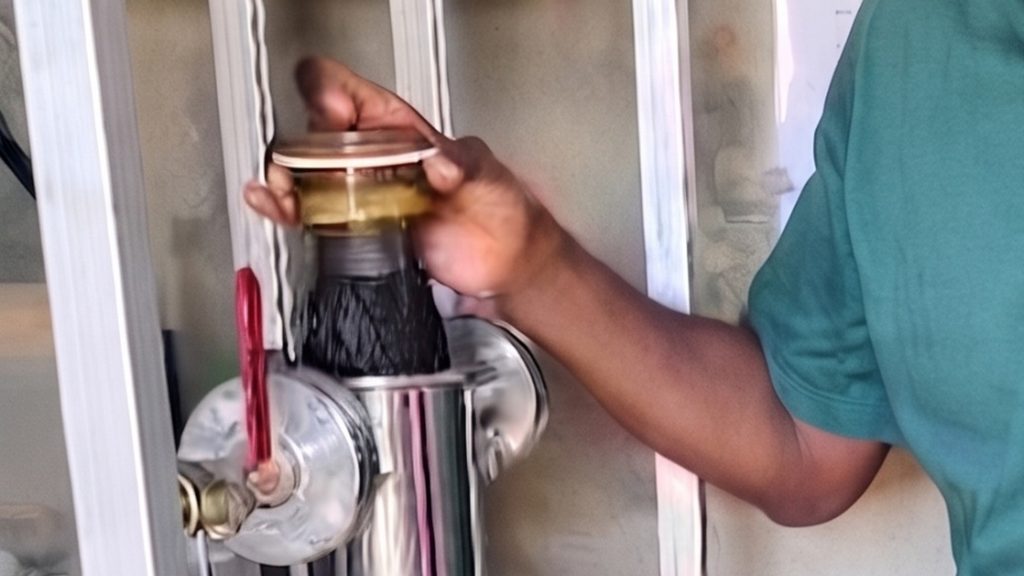
The membrane was covered with mud and was almost black.
“Wow… no wonder the water cannot pass through!”
However, the membrane is very delicate.
We could not use strong chemicals, and we could not scrub it hard with a brush.
So the local team carefully washed it by hand.
Little by little, they removed the mud from the surface.
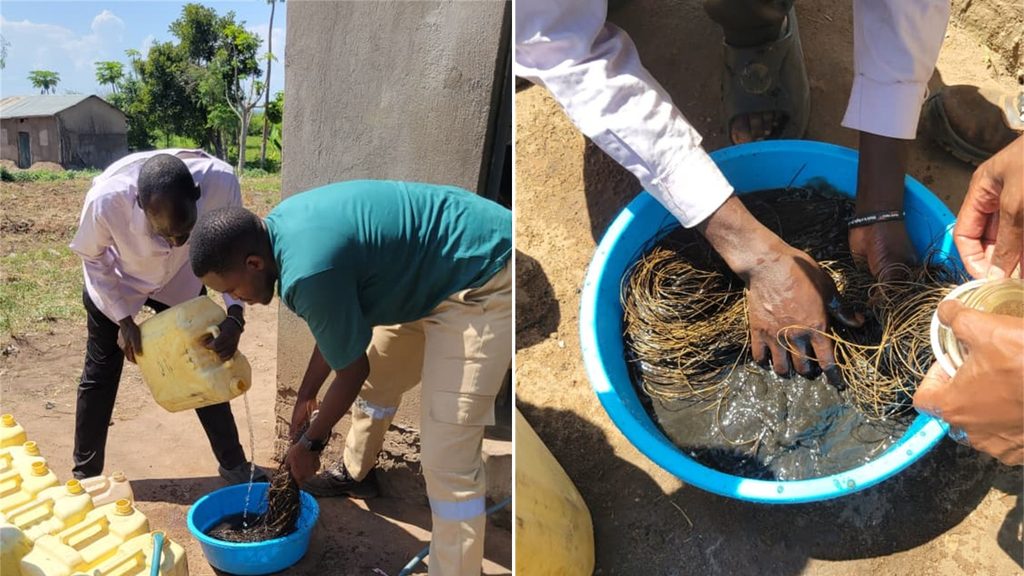
Then they put the membrane back into the system and carried out the correct cleaning process again.
This time, very dirty water came out immediately.
“Oh! This may work!”
Then we restarted the purification system.
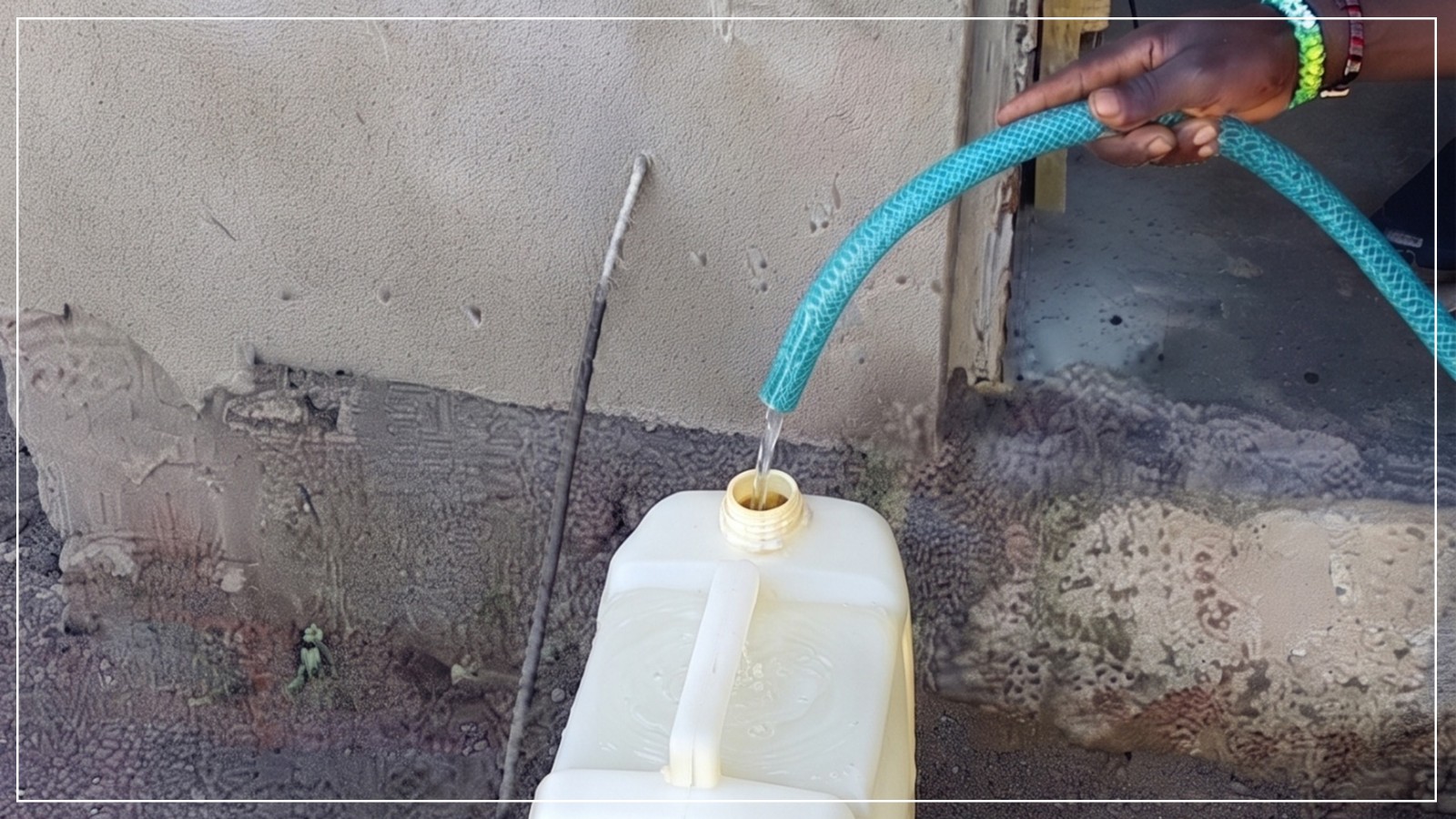
Water came strongly out of the hose again.
The system was back.
We were very relieved.
Repairing the System Was Not the End
The water flow came back, but our work was not finished.
The main cause of the problem was that the membrane cleaning process had not been done correctly.
If people continued using the system in the same way, the same problem would happen again.
So after the system recovered, our local partner trained the village team again. They explained how to operate the system and how to clean the membrane correctly.
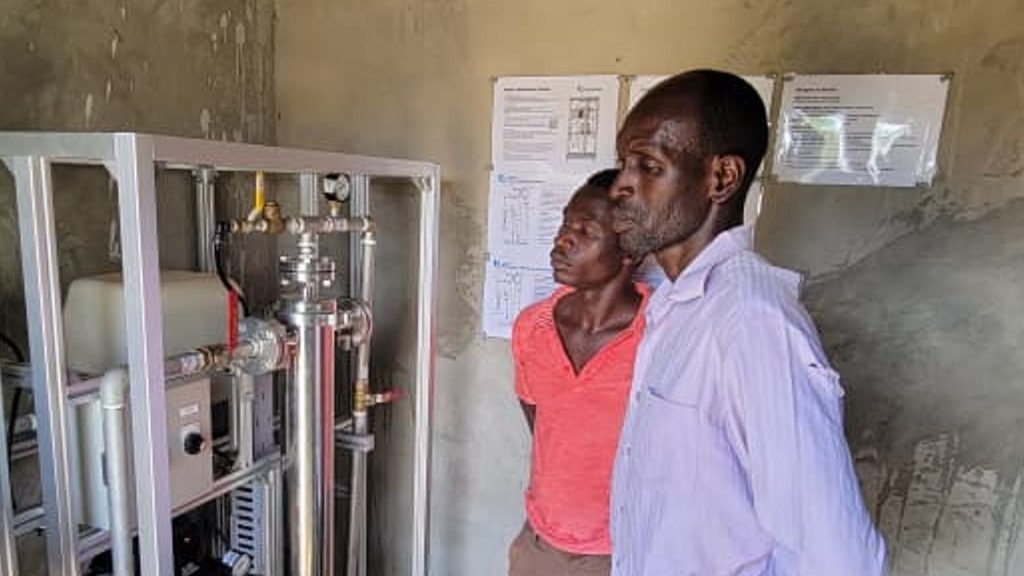
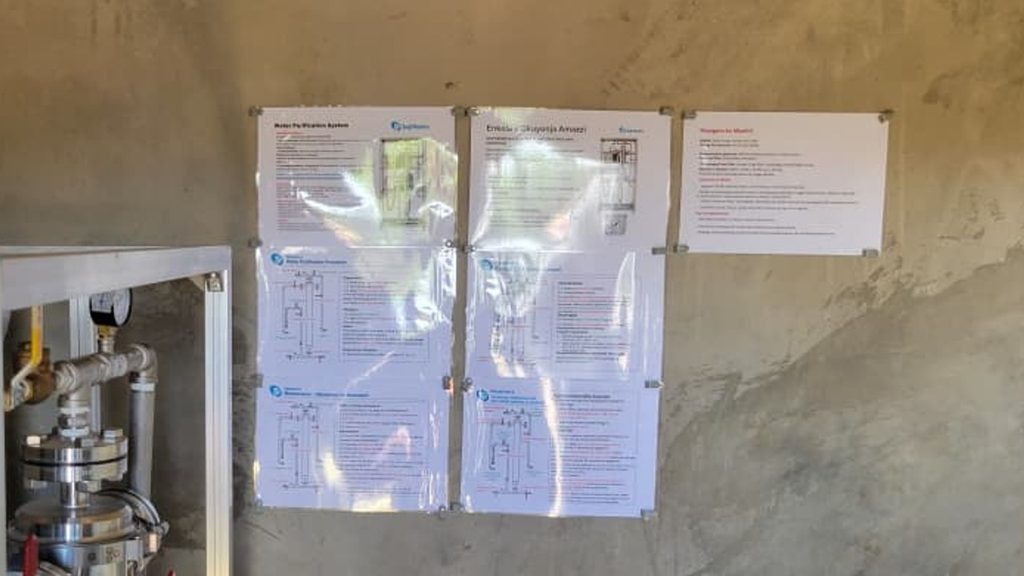
We also put detailed instructions on the wall near the equipment so that people can check them anytime.
People forget things. That is normal.
So instead of saying,
“Please never forget!”
We think it is better to create a system where people can quickly check the correct procedure when they forget.
This experience taught us something very important again.
Bringing good equipment to a village is not enough.
There must also be people who can check the system, maintain it, repair problems, and teach others again when needed. When necessary, we can support them online from Japan, but the local team must also be able to work on the system themselves.
The membrane probably suffered serious damage this time.
But somehow, it survived and started working again.
Today, this water purification system has become very important not only for the village, but also for people living in the surrounding area.
Installing equipment is one thing.
Keeping it working for many years is much more difficult.
This big problem reminded us of that again.