From one former student to a growing solar business rooted in local communities
Life After Sunset in Rural South Sudan
In many rural areas of South Sudan, electricity is still not something people can use freely every day.
When the sun goes down, many activities become difficult. Shops may have to close early. People may not be able to charge their mobile phones. Children may not have enough light to study. Clinics may face difficulties when supporting patients in the evening.
In these areas, solar power has great potential. Even in places without access to the power grid, sunlight can be used to generate electricity. This electricity can support work, communication, learning, and daily life after sunset.
However, simply installing solar equipment is not enough.
Each community has different needs. A barber shop, a phone charging service, a clinic, a home, and a school all use electricity in different ways. The system must match the actual situation on the ground.
What we have seen in South Sudan is not only the introduction of solar equipment. It is the process of how one light can support work, improve daily life, and expand people’s opportunities.
Supporting Local Businesses with Practical Solar Solutions
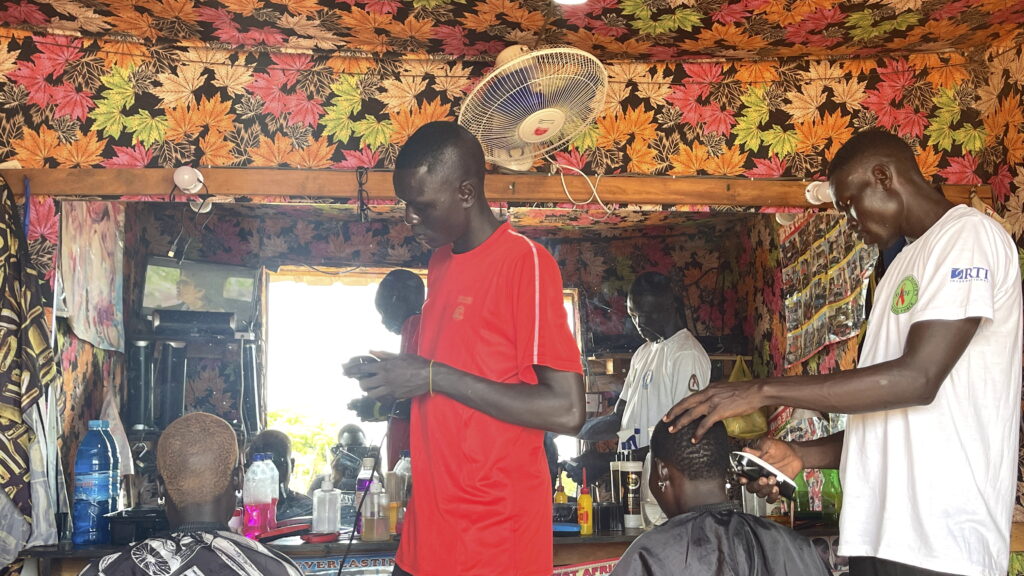
In one rural community in South Sudan, a barber shop already had a solar system. However, the shop often did not have enough electricity in the evening.
For a barber shop, evening is an important time. Many customers come after work. If there is not enough power for lighting or equipment, the shop cannot continue operating during one of its busiest times.
Our local partner checked the existing system and looked for a practical solution. Instead of replacing everything, he tried to make use of what was already available.
He added solar panels, reviewed the control system, and used the existing battery where possible.
As a result, the barber shop became able to continue its business into the evening.
This was not only a technical improvement.
For the shop owner, it meant more working hours.
For customers, it meant they could visit the shop after work.
For the community, it meant one more local service could continue operating after sunset.
A small improvement in a solar system helped support a local business and daily life in the community.
Mobile Phone Charging as Small but Essential Infrastructure
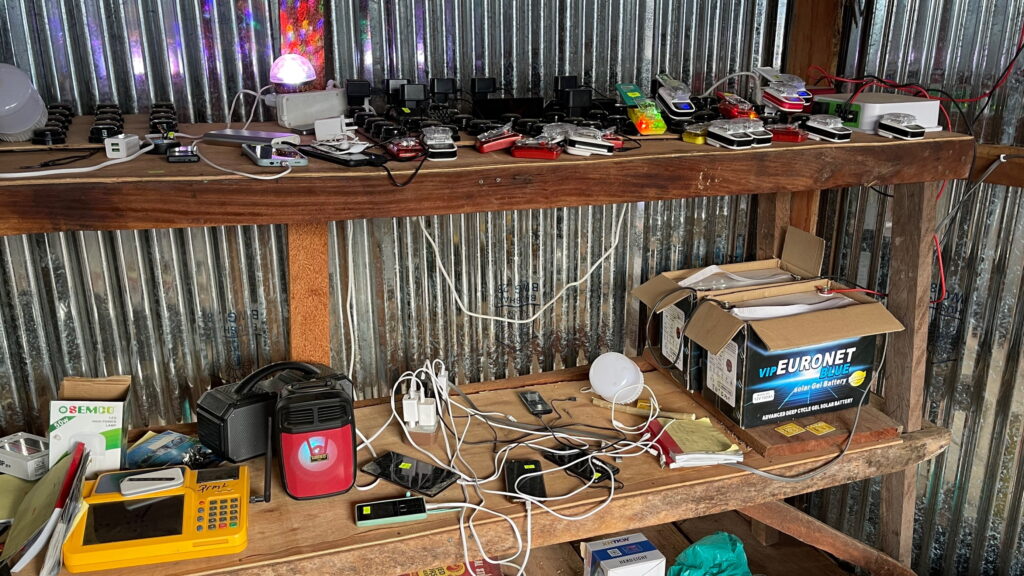
In areas without stable electricity, a place to charge mobile phones is more than a convenient service.
Mobile phones are needed to contact family members, communicate for work, use mobile money services, and access important information. In many communities, phone charging services are a small but essential part of local infrastructure.
However, one local charging service also had a problem. It could not provide enough electricity in the evening, when many people needed to charge their phones.
Our local partner reviewed the balance between solar power generation, battery capacity, and electricity use. By improving the system design, the service was able to operate for longer hours.
This helped the business increase its income and serve more people at the time they needed it most.
When electricity is available until night, people can continue communicating, working, and staying connected. This shows that solar power is not only about equipment. It can also support local business and social connection.
Light for Clinics, Homes, and Children’s Learning
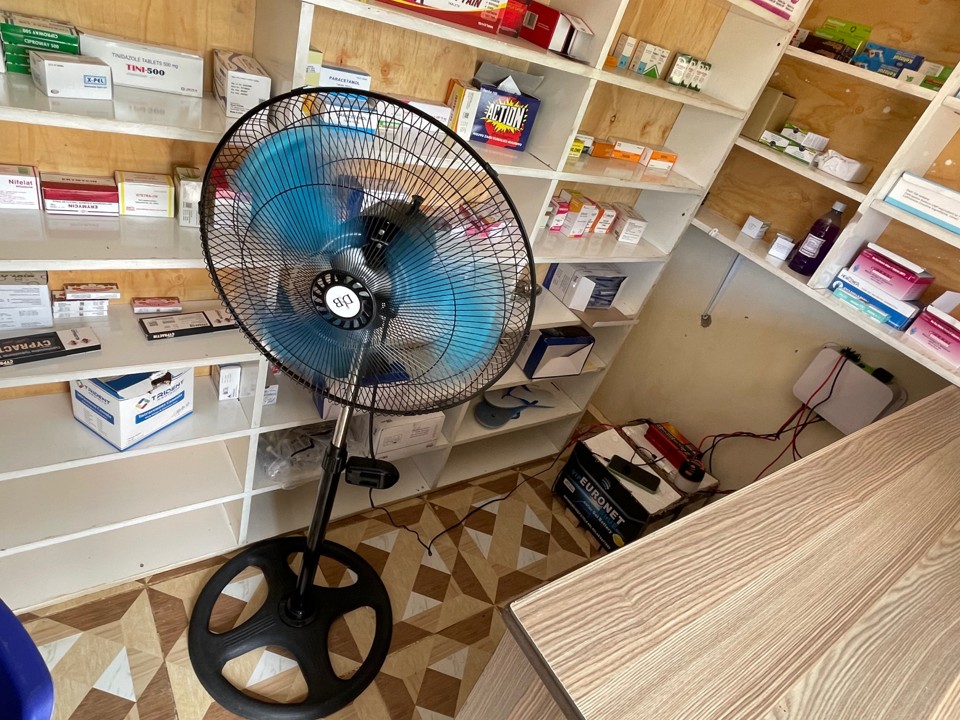
Electricity is also important for clinics and homes.
In a local clinic, lighting can make it easier to receive patients in the evening. A fan can reduce the burden on both patients and staff in hot weather. Charging mobile phones or small devices can also support communication and basic operations.
A small solar system does not support only one building. It supports the people who visit the clinic, the people who work there, and the sense of safety in the community.
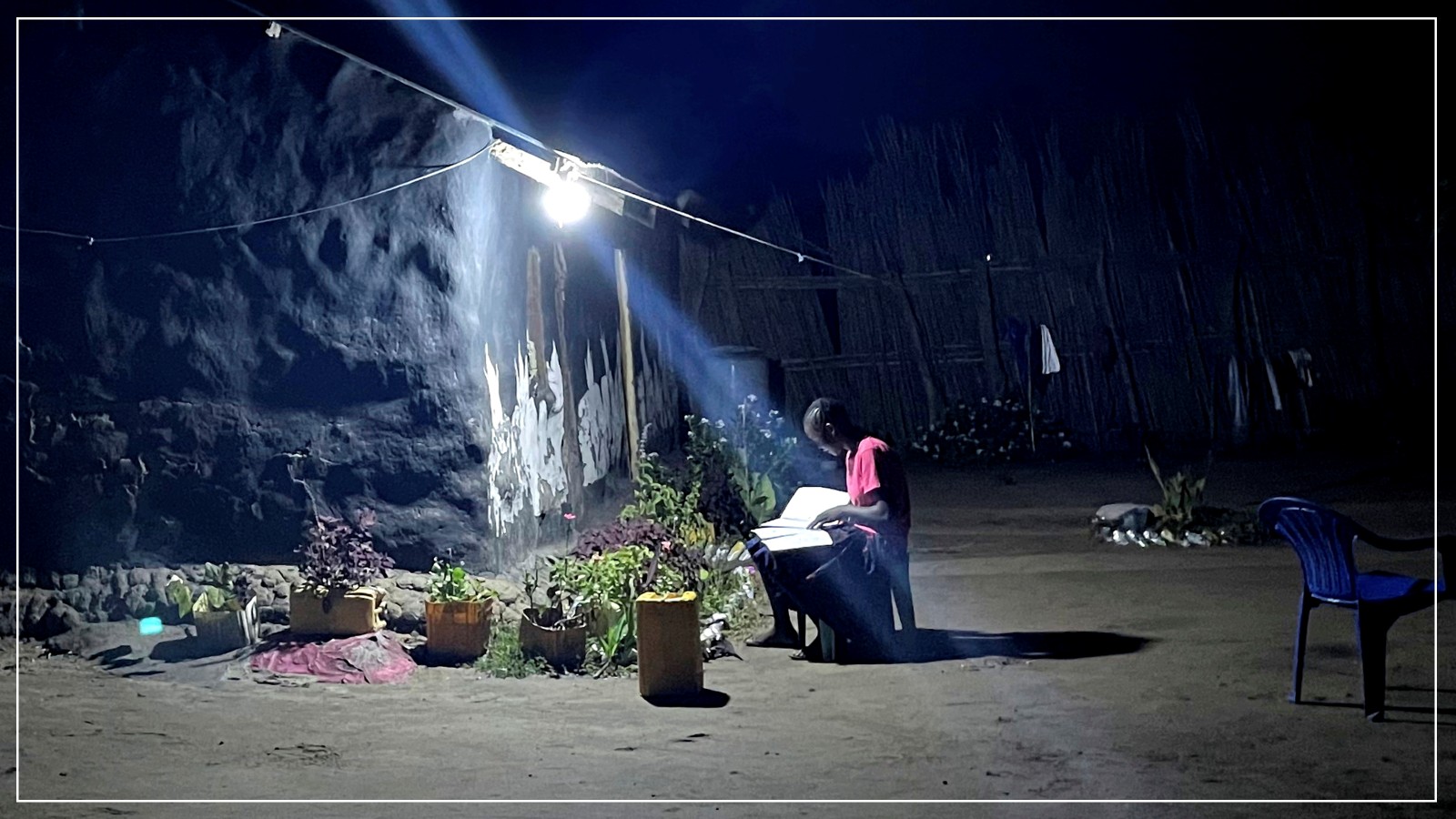
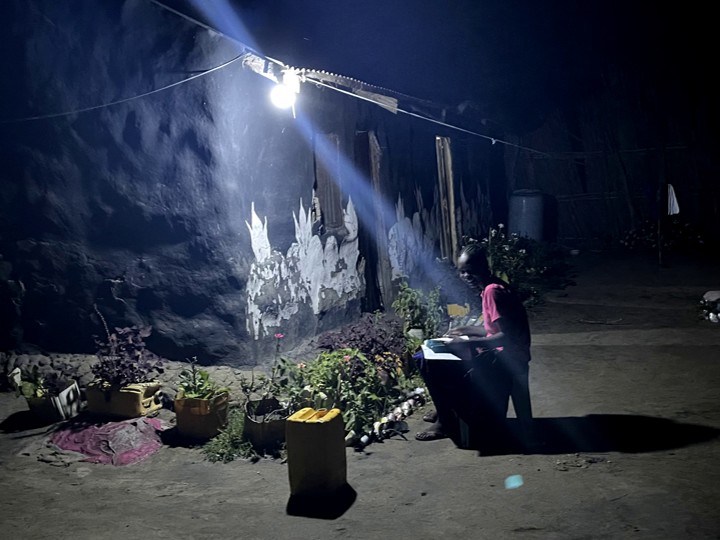
At one home, a solar system was installed after the family had waited for more than six months. On the night of installation, a child was studying under the outdoor light.
For us, this was a very symbolic moment.
Light is not only for brightness.
It can support work.
It can support safety.
It can support family life.
And it can support children’s learning.
The Beginning: Technical Training in Japan
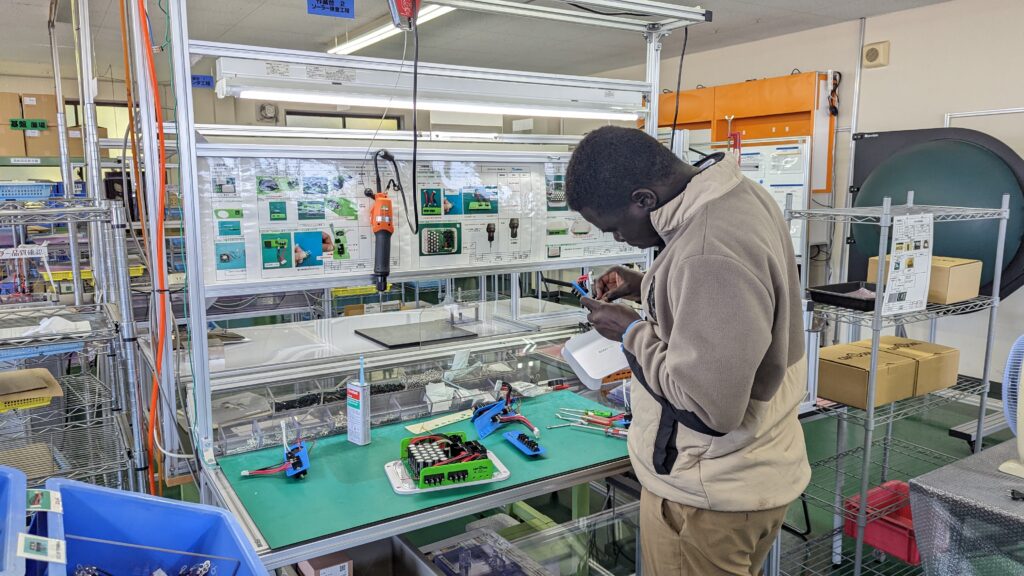
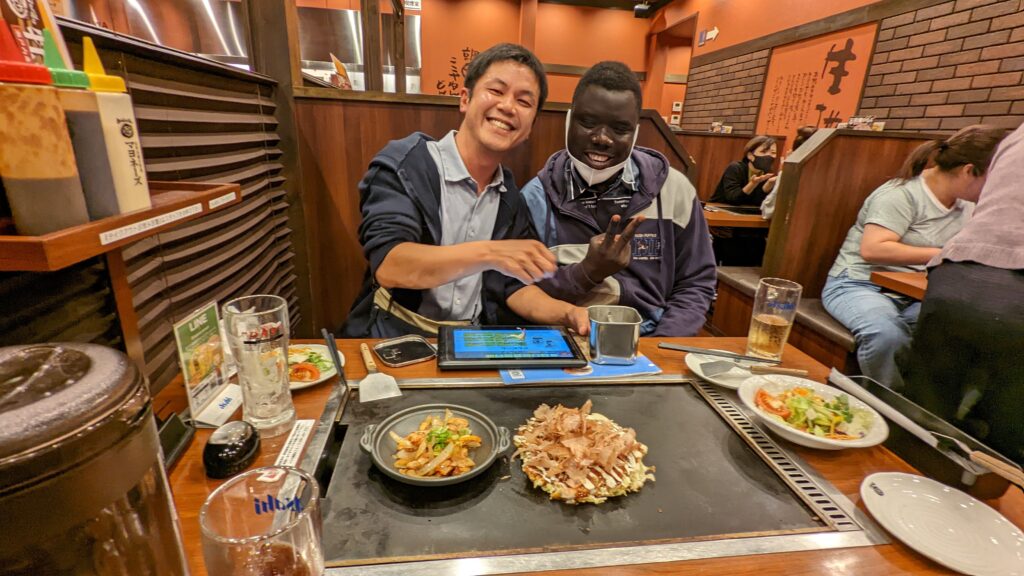
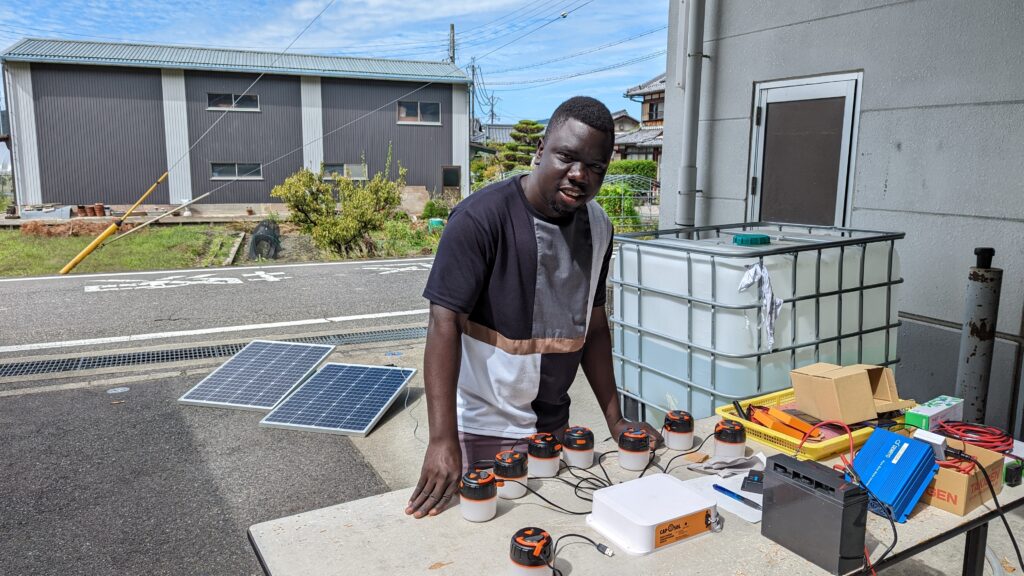
Behind these local changes is our business partner in South Sudan.
He was not a solar power specialist from the beginning. He first came to Japan through the ABE Initiative. At that time, he had very limited experience with solar power systems.
During his time with Tsuji Plastics Co., Ltd., he learned by actually touching the equipment, checking wiring, assembling systems, and operating them.
The training was not only classroom learning. It was practical, hands-on learning.
He learned how to read the balance between solar power generation, electricity use, and battery capacity. He also learned how to reduce the burden on batteries and how to design a system that matches the actual needs of users.
In South Sudan, every site is different.
A barber shop, a phone charging service, a clinic, a home, a school, and an office all need electricity in different ways. The amount of power, the time of use, and the budget are different in each case.
That is why it is important to have someone who can understand the site, listen to the user, and propose a suitable solution.
The technology he learned in Japan became practical knowledge that he could use in his own country.
From Small Lights to Larger Solar Systems
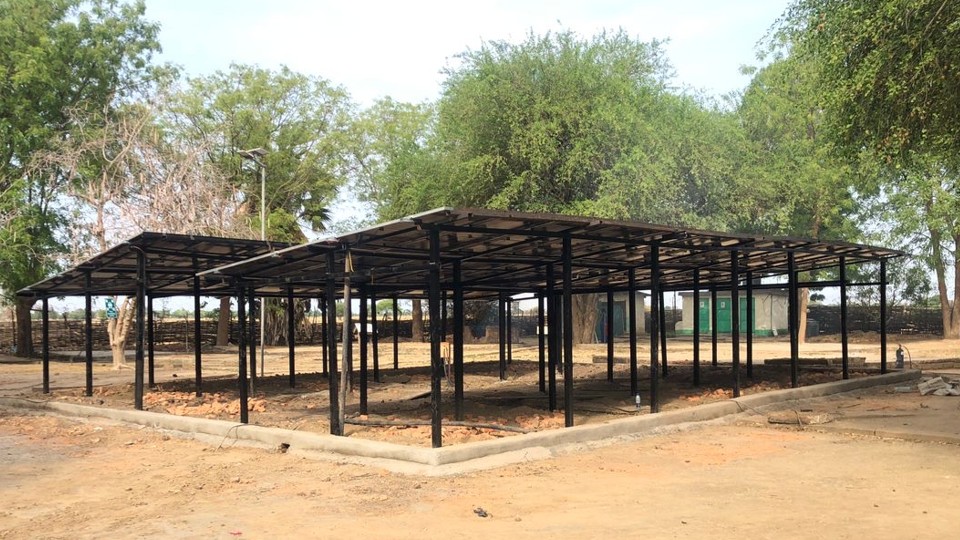
After returning to South Sudan, he started using the knowledge and skills he had learned in Japan.
He did not begin with large capital or a big sales network. He started by working carefully with each customer.
He explained the system, checked the actual needs, proposed a suitable design, and installed the system properly. He also continued communicating with customers after installation.
This steady work gradually built trust.
Today, he is not only supporting homes and small shops. He is also receiving requests and consultations from organizations, including international NGOs, for larger solar power systems.
He is now involved in solar projects that can support offices, facilities, and wider community needs.
This shows how technical training can grow into local business.
It also shows how one person’s learning experience in Japan can become a foundation for solving problems in his home country.
Technology Remains When People Can Use It
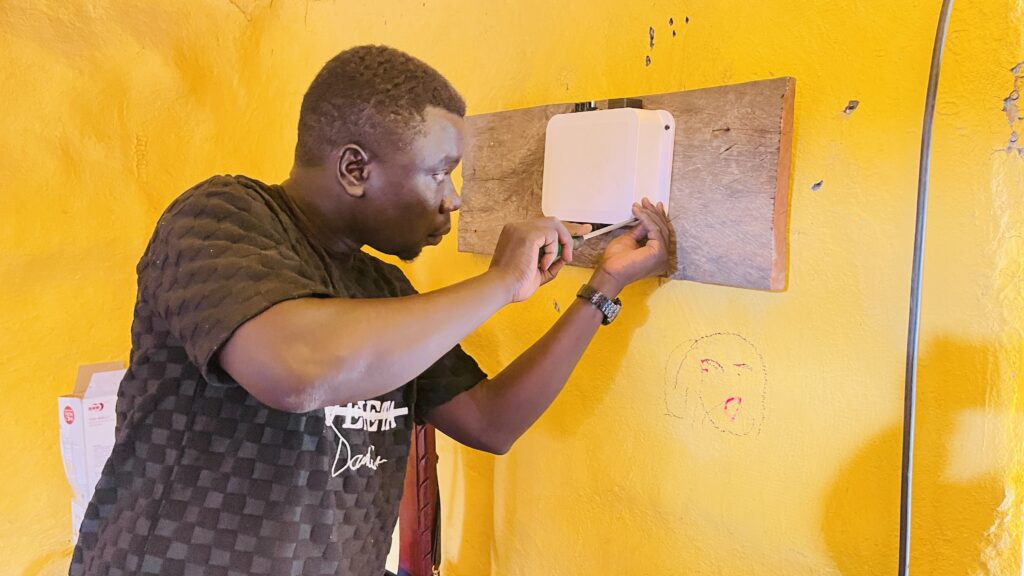
At Tsuji Plastics, our goal is not only to supply products.
For technology to take root in a local community, there must be people who can explain it. There must be people who can install it. There must be people who can check problems, make improvements, and propose solutions that match local life and work.
Only when such people are trained can technology truly remain in the community.
This is the story of one person’s growth.
It is also the story of how skills learned in Japan can help solve challenges back home.
For African students studying in Japan, or those who hope to study in Japan, this story may show one possible future. The knowledge, skills, and human connections gained in Japan can become a powerful tool after returning home.
For Japanese government offices and development partners in Africa, this is also one example of sustainable cooperation between a Japanese company and local human resources.
In South Sudan, many people still need reliable access to electricity.
Shops need light to continue business after sunset.
Clinics need power to support local people.
Families need light for safety and daily life.
Children need light to study.
Communities need people who can keep these systems working.
We believe that what is needed is not only equipment.
What is needed is a system that can be used for a long time, and local people who can support it.
Tsuji Plastics will continue working with local partners to expand solar power systems that can be used sustainably in South Sudan and other parts of Africa.
What we hope to deliver is not only equipment.
We hope to support technology, local human resources, and light that remains in the community.